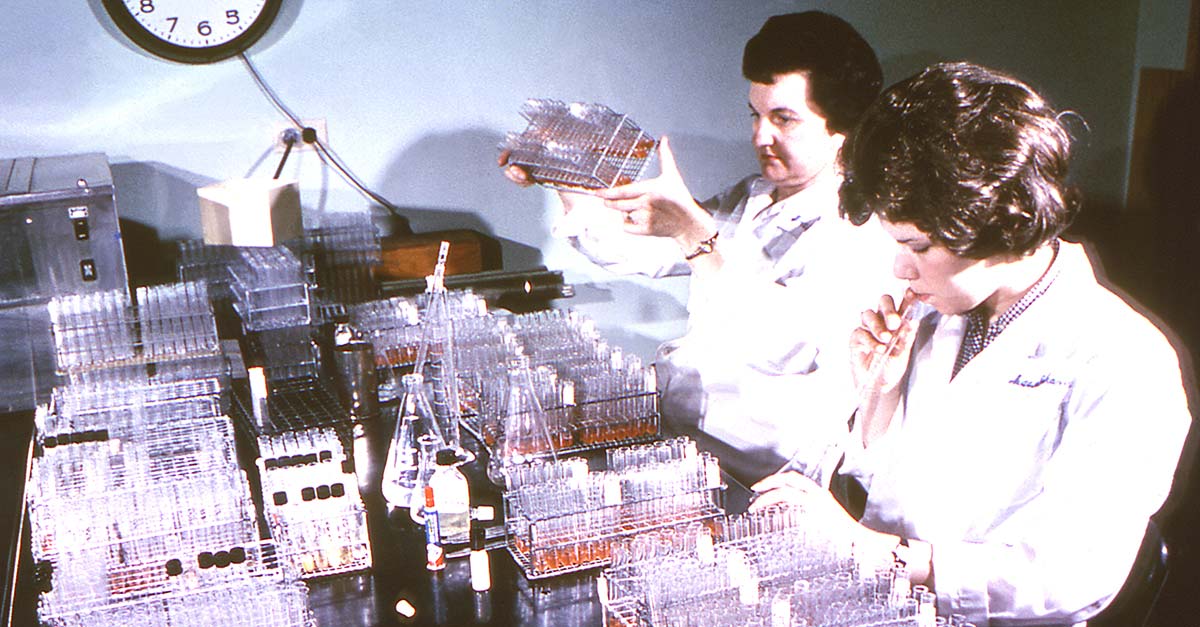
From its origins as a simple straw to today’s superbly-automated piece of modern machinery. The workhorse of laboratories across the world, the pipette, has a deep and wonderful history.
As far back as 1893, when a doctor accidentally sucked Typhoid bacteria into his mouth using a “mouth pipette”, or glorified straw, it’s easy to see that the world of pipettes needed to change. If not for the accuracy of the measurements then surely for the safety of its users!
Through the late 70’s when the first micropipette entered production, and onwards to 2007 when Brookhaven National Laboratory invented a pipette that could dispense a zeptoliter of material, the life of this incredible tool has certainly been interesting. Now in 2020, the stalwart of laboratories is mechanized, connected to robotics and is a very different beast than those original glass tubes.
QUINTA-ANALYTICA are proud to announce the introduction of the Hamilton Robotics Microlab VANTAGE Liquid Handling System® in our labs. Giving the versatility of manual models, but with automation comes key advantages including consistency, accuracy & increased speed.
With technology constantly developing, our recent arrivals ensure Quinta remains at the forefront of the pharmaceutical industry!